Showing posts with label Cannabis or Marijuana Related. Show all posts

Monday, October 28, 2013

FDA Approves Investigational Studies on Drugs Developed From Cannabis

October 28, 2013 | By  | Reply
Just last year, I reported on a British company, GW Pharmaceuticals which was in advanced clinical trials for the world’s first pharmaceutical developed from raw marijuana instead of synthetic equivalents. It was only a matter of time before a medication was formulated on the powerful properties of Cannabis. In response to urgent need expressed by parents of children with intractable epilepsy, the U.S. Food and Drug Administration is now allowing Investigational New Drug studies of purified CBD (cannabidiol) as an anti-seizure medication. The “new drug” is being provided to physician-investigators by GW Pharma, which has named its CBD product “Epidiolex.”
Epidiolex’s predecessor, Sativex contained marijuana’s two best known components — delta 9-THC and cannabidiol — and had already been approved in Canada, New Zealand and eight European countries for a different usage, relieving muscle spasms associated with multiple sclerosis.
Raw cannabis is considered by many experts as a dietary essential. As a powerful anti-inflammatory and antioxidant, some classify it as one of the most important plants on earth. The biggest benefits from the plant may come not by smoking it, but rather by consuming it in its raw and natural form.
The U.S. Patent 6630507 was specifically initiated when researchers found that cannabinoids had specific antioxidant properties making them useful in the treatment and prophylaxis of wide variety of oxidation associated diseases, such as ischemic, age-related, inflammatory and autoimmune diseases. The cannabinoids are found to have particular application as neuroprotectants, for example in limiting neurological damage following ischemic insults, such as stroke and trauma, or in the treatment of neurodegenerative diseases, such as Alzheimer’s disease, Parkinson’s disease and HIV dementia. Nonpsychoactive cannabinoids, such as cannabidoil, are particularly advantageous to use because they avoid toxicity that is encountered with psychoactive cannabinoids at high doses useful in the method of the present invention.
In 1985, the FDA approved two drug capsules containing synthetic THC, Marinol and Cesamet, to ease side-effects of chemotherapy in cancer patients. The agency eventually allowed Marinol to be prescribed to stimulate the appetites of AIDS patients. The drug’s patent expired last year, and other U.S. companies have been developing formulations that could be administered through dissolving pills, creams and skin patches and perhaps be used for other ailments.
I’m not at all in favour of government persecuting the public for possessing cannabis and then giving pharmaceutical companies free reign to market to the masses, but regardless of this injustice, if GW can produce a high quality product that can help thousands of children, I would put my opinion on the shelf for the betterment of their health as long as it was pure and accessible to all.
I also realize that the majority of the public is not interesting in growing their own cannabis. So for those following the conventional system, a high quality pharmaceutical may be your only route. As terrible as that may sound, especially since Big Pharma does anything but produce quality products for our health, sometimes we must keep some doors open before we close them.
The idea of extracting CBDs from cannabis without any THC does remove some of the plants native properites, but according to research, it is equally as effective.
Unlike Sativex, which is formulated for spraying under the tongue, Epidiolex is a viscous liquid that comes in a bottle with a syringe dropper. It consists of more than 98 percent CBD, trace quantities of some other cannabinoids, and zero THC. “Our definition of pure,” says Guy, “is no THC.” The company will provide two strengths to the physician-investigators: 25 milligrams per milliliter, and 100mg/ml.
To date FDA has approved intermediate-sized INDs sponsored by Orrin Devinsky, MD, at the NYU School of Medicine, and Roberta Cilio, MD, PhD, at UCSF –each set up to follow 25 patients using Epidiolex as a treatment for pediatric epilepsy– plus two individual INDs by Cilio. More INDs await FDA approval. [Style note: the jargon calls for dropping the word "study" after IND, just as the word "proposal" gets dropped when researchers speak of "writing a grant.”] Devinsky and Cilio both made presentations at a conference on “Cannabidiols: potential use in epilepsy and other neurological disorders,” held at NYU October 4.
GW chairman Geoffrey Guy, MD, says, “In the coming months, if the FDA is comfortable about how things are going, there will be a number of senior epileptologists in major university centers throughout the U.S., each treating a couple of dozen patients with various epilepsies.”
Each physician-sponsored, intermediate-sized IND can enroll additional patients, with FDA approval. Given the level of need and the efficiency of the concerned parents’ network, it’s possible that in the year ahead, hundreds of children with various severe forms of epilepsy will be enrolled in INDs and being treated with GW’s Epidiolex.
GW got government approval in 1998 to develop cannabis-based plant extracts. Their flagship produc Sativex is a highly defined extract containing an approximately 50-50 mix of CBD and THC that has been approved by regulators in the UK and more than 20 other countries for treating pain and spasticity in Multiple Sclerosis.
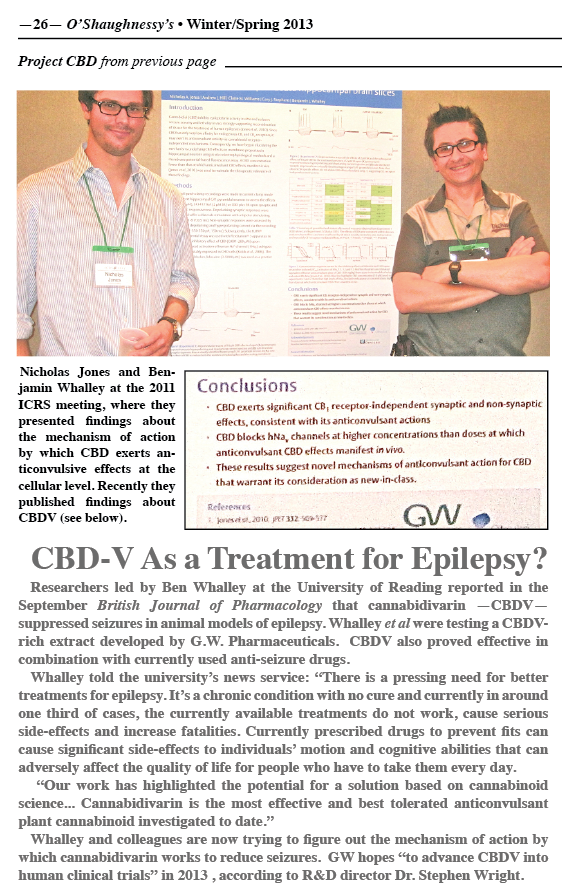
In recent years, GW tested several CBD formulations in animals and provided small amounts to investigators who had initiated preclinical studies in various countries. Ben Whalley and colleagues at the Center for Integrative Neuroscience and Neurodynamics, University of Reading, using mouse models of epilepsy, established safety and showed that CBD and another cannabinoid, CBDV, exert anti-seizure and anti-inflammatory effects. This research came to the attention of families in the US who had loved ones with epilepsy.
In late 2012 some American parents began contacting GW in hopes of obtaining CBD. They asked if GW could provide CBD to the physicians treating their children under the FDA’s “Expanded Access” IND program. GW, which had been working closely with the FDA in connection with Sativex, looked into the IND option and decided it was practical.
Expanded Access
The FDA’s informal so-called “compassionate” IND program that made federally-grown cannabis available to a fortunate few in the late 1970s and early ‘80s had been given structure in 1997 when Congress passed the Food and Drug Administration Modernization Act. The FDA then developed regulations covering IND studies for unapproved drugs. These were revised over the years, and in August 2009 FDA issued its “final rule” on “Expanded Access to Investigational Drugs for Treatment Use.” The summary states:
“Under the final rule, expanded access to investigational drugs for treatment use is available to individual patients, including emergencies; intermediate-size patient populations; and larger populations under a treatment protocol or treatment investigational new drug application (IND). The final rule is intended to improve access to investigational drugs for patients with serious or immediately life-threatening diseases or conditions who lack other therapeutic options and who may benefit from such therapies.”
The regulations spell out criteria for INDs. The would-be investigator must submit, among other things:
“Chemistry, manufacturing, and controls information adequate to ensure proper identification, quality, purity, and strength of the investigational drug.”
In other words, FDA wants to see a highly standardized, tested, Good-Manufacturing-Practices medication — which Epidiolex is. The herb provided by NIDA to the four surviving beneficiaries of the old informal program would not be approved as a treatment under the current FDA regs.
When GW was approached by the parents of epilepsy patients in late 2012, the company already possessed extensive preclinical data — five-and-a-half years’ worth — establishing the safety of its CBD product, as well as information the FDA would require concerning its chemistry, manufacturing, controls, pharmacology, and toxicology. The company agreed to provide purified CBD and the requisite data for a single patient IND.
Soon after the first IND got underway, an extremely favorable response was reported. Your correspondent asked about the patient’s age and gender, the level of seizure reduction, and the name of the doctor providing treatment. Guy responded:
“All these patients remain anonymous and it will be the responsibility of the physician to maintain confidentiality. As a general point, all treatments are and will be for those children and some adults who remain drug-resistant despite having tried a range of standard anti-epilepsy medications. Such drug resistance may be lack of seizure control or intolerable side effects or a combination of both. The frequency of seizures will range from many tens a day to a few per week. Therefore if benefit is to be noted it becomes apparent with days or weeks.
“One has to be mindful that in such patients there is often an initial ‘honeymoon effect’ when changing to any new drug. What the physicians will want to see is a sustained response over many months, perhaps with withdrawal of other anti-epileptic medicines — at which time it would not be unreasonable to expect to see case reports appearing in the medical literature.”
In early 2013 GW and NYU School of Medicine arranged a meeting in New York of epilepsy specialists interested in conducting clinical research with purified CBD in the United States. Encouraged by the response to CBD treatment by the initial patient, these doctors wanted to sponsor INDs at their various institutions. “We agreed to provide them with CBD so that they could treat their most needy cases,” says Guy.
The term “epilepsy” applies to more than 40 different seizure disorders, some with specific causes, others more general. Guy expects the physician-sponsored INDs to yield “understanding and experience in what cannabidiol does in these different children groups, what benefit we can see, and how the results can best be measured.”
The primary purpose of a physician-sponsored IND is treatment of the patient, not research regarding effectiveness. But if investigators see signals of effectiveness — say, reduced seizures in a number of patients — it might expedite FDA approval of a “Treatment IND” by GW, otherwise known as a phase 3 clinical trial.
Will doctors throughout the US be called on to submit INDs on behalf of pediatric epilepsy patients whose families want access to Epidiolex? Interested doctors should direct inquiries to GW’s Associate Medical Director at medicaldirector@gwpharm.com. The manufacturer has an obvious interest in confirming the doctor’s expertise and assuring that patients treated with Epidiolex will be properly selected and monitored. If the would-be investigator has an affiliation with a medical center, he or she would have to get the approval of an Institutional Review. Then s/he would need to get DEA and the corresponding state agency to license their “site” (office) for dispensing of Epidiolex. They would also need to get an import license.
O’Shaughnessy’s asked Guy why GW hadn’t publicized the anti-seizure effects of CBD back in January, when the initial patient responded so favorably – leaving it to Sanjay Gupta, MD, to break the news in August. Guy replied,
“We’re in the business of developing medicines, not headlines. If we had made a big splash about the initial findings, someone in the scientific community would ask, ‘What have you got?’ And we’d say, ‘Well, we’ve got one or two children.’ That wouldn’t be enough evidence to impress them.
“We wanted to make sure that the pediatric epileptologists were comfortable with the approach being taken and that the FDA would go with it. We’ve been very busy in the US this past year, but we’ve kept our heads down. In the months ahead you’ll see a manifestation of all that work. Then it’s a matter over the next year or two of generating sufficient data of appropriate quality and scope to be able to move towards getting approval.”
Guy expects the physician-sponsored INDs to yield “understanding and experience in what cannabidiol does in these different children groups, what benefit we can see, and how the results can best be measured.”
According to Guy, CBD is exerting “not just an anti-seizure effect. It’s anti-inflammatory, neuro-modulatory, and has been shown in animals to counter neonatal hypoxic ischemia [oxygen starvation during delivery] — an important problem you see after seizures in these children.
‘You’ve got an underlying inflammatory process which is massively exaggerated by excitotoxcity after each seizure, which is setting up the next seizure in a way. It’s not enough to treat just the seizures without treating the underlying inflammatory encephalitis and the hypoxic ischemia and the damage to neuroplasticity. Children’s brains are very plastic and can usually work around issues, but if you’re having continuing seizures and continuing inflammation, that ability will be dampened. We’re hoping from the preclinical work that cannabidiol will address a number of these different issues, not just one.”
If CBD turns out to be merely equal to conventional medications prescribed for epilepsy (rather than more effective), it may well be superior in terms of side effects. There is evidence that conventional anti-consulvants are detrimental to cognition and longterm development, whereas CBD is likely to prove benign.
About the Author
Marco Torres is a research specialist, writer and consumer advocate for healthy lifestyles. He holds degrees in Public Health and Environmental Science and is a professional speaker on topics such as disease prevention, environmental toxins and health policy. 

Wednesday, September 11, 2013

Although Marijuana Smoke Contains Many of The Same Constituents as Tobacco Smoke, It Does Not Adversely Affect The Lungs

September 10, 2013 | By  | 3 Replies
I’m a huge advocate of using cannabis in its purest form to maximize its therapeutic benefits. Smoking it should be your last resort to achieve the array of health benefits is has to offer. However, a large-scale national study suggests that even moderate use of marijuana is less harmful to users’ lungs than exposure to tobacco, even though the two substances contain at least some of the same components.
This comprehensive study, led by UCSF and University of Alabama at Birmingham, collected data from more than 5,000 U.S. adults for more than 20 years.
The study, published in of Journal of the American Medical Association, also offered up a nugget that likely will surprise many: Evidence points to slight increases in lung airflow rates and increases in lung volume from occasional marijuana use.
Air flow is the amount of air someone can blow out of their lungs one second after taking the deepest breath possible. The volume measure is the total amount of air blown out once someone has taken the deepest breath possible.
In the paper published in the Journal of American Medical Association (JAMA), researchers analyzed the relationship between current and lifetime exposure to marijuana and pulmonary function. The Coronary Artery Risk Development in Young Adults (CARDIA) study collected medical data from 5,115 men and women in four U.S. cities from 1985 to 2006.
They measured air flow rate — the speed in which a person can blow out air — and lung volume, which is the amount of air a person is capable of holding, typically about six liters of air for an adult male. Lung function was measured using a common medical device called a spirometer that measures air flow when the participant breathes in and out.
Cumulative cannabis use is associated with higher forced vital capacity [the volume of air that can forcibly be blown out after full inspiration], total lung capacity, functional residual capacity [the volume of air present in the lungs at the end of passive expiration] and residual volume.
Cannabis was also associated with higher airways resistance but not with forced expiratory volume in one second [the maximum volume of air that can be forcibly blown out in the first second during the FVC test], forced expiratory ratio, or transfer factor. These findings were similar amongst those who did not smoke tobacco. By contrast, tobacco use was associated with lower forced expiratory volume in one second, lower forced expiratory ratio, lower transfer factor and higher static lung volumes, but not with airways resistance.”
“With marijuana use increasing and large numbers of people who have been and continue to be exposed, knowing whether it causes lasting damage to lung function is important for public-health messaging and medical use of marijuana,” according to one of the study’s co-authors, Stefan Kertesz. “At levels of marijuana exposure commonly seen in Americans, occasional marijuana use was associated with increases in lung air flow rates and increases in lung capacity.”
He added that those increases, though not large, nonetheless were statistically significant. “And the data showed that even up to moderately high-use levels — one joint a day for seven years — there is no evidence of decreased air-flow rates or lung volumes,” he said.
Cannabis appears to have different effects on lung function to those of tobacco.
Smoking cigarettes can cause significant lung damage, including respiratory symptoms, chronic obstructive pulmonary disease and lung cancer. It accounts for an estimated 443,000 deaths, or nearly one in every five deaths, each year in the United States, according to the U.S. Centers for Disease Control and Prevention (CDC). Data for the long-term effects of marijuana use on the pulmonary system has been scarce until now.
“We found exactly what we thought we would find in relation to tobacco exposure: a consistent loss of lung function with increasing exposure,” said Mark Pletcher, MD, MPH, associate professor in the Division of Clinical Epidemiology at UCSF. “We were, however, surprised that we found such a different pattern of association with marijuana exposure.”
“Essentially with tobacco, the more you use, the more loss you have with both of the indicators, air flow rate and lung volume,” said the paper’s last author Stefan Kertesz, MD, MSc, associate professor in the Division of Preventive Medicine at the University of Alabama at Birmingham School of Medicine and the Birmingham VA Medical Center. “There’s a straight-line relationship: the more you use, the more you lose.”
The same was not true with marijuana use. Air flow rate increased rather than decreased with increased exposure to marijuana up to a certain level.
“An important factor that helps explain the difference in effects from these two substances is the amount of each that is typically smoked,” Pletcher said. “Tobacco users typically smoke ten to 20 cigarettes/day, and some smoke much more than that. Marijuana users, on average, smoke only two to three times a month, so the typical exposure to marijuana is much lower than for tobacco.”
“And marijuana is one where a lot of people dabble with it in their late teens and 20s, and some people continue with relatively low levels for a long period of time,” Kertesz added.
Heavy Marijuana Use May Take Toll…Maybe
Although there was a suggestion that very heavy use of marijuana might be taking a toll on the lungs, the researchers could not get reliable estimates of the effects of very heavy marijuana exposure, as such smokers were relatively rare in the study population.
All participants in the study began as young, healthy adults 18 to 30 years old from four communities: Oakland, Chicago, Minneapolis and Birmingham. They volunteered to be part of this long-term medical research study, agreeing that their data could be used to explore questions, including about tobacco and marijuana use.
Researchers believe the results can supplement the growing body of knowledge about beneficial aspects of low to moderate marijuana use in controlling pain, stimulating appetite, elevating mood and managing other chronic symptoms.
“Our findings suggest that occasional use of marijuana for these or other purposes may not be associated with adverse consequences on pulmonary function,” Pletcher said. “On the other hand, our findings do suggest an accelerated decline in pulmonary function with heavier use — either very frequent use or frequent use over many years — and a resulting need for caution and moderation when marijuana use is considered.”
Like cigarette smokers, marijuana users can develop throat irritation and coughs, but the study didn’t focus on those. It also didn’t examine lung cancer, but other studies haven’t found any definitive link between marijuana use and cancer.
Raw Cannabis is Best
Despite this findings, raw cannabis is considered by many experts as a dietary essential. As a powerful anti-inflammatory and antioxidant, some classify it as one of the most important plants on earth. The biggest benefits from the plant may come not by smoking it, but rather by consuming it in its raw and natural form.
CBD (Cannabidiol), one of the main constituents of the cannabis plant has been proven medically to relieve many diseases including the inhibition of cancer cell growth. Recent studies have shown it to be an effective atypical anti-psychotic in treating schizophrenia. CBD also interferes with the amount of THC your brain processes, balancing the psychotropic effect of marijuana.
A British company, GW Pharma, is in advanced clinical trials for the world’s first pharmaceutical developed from raw marijuana instead of synthetic equivalents and they say they’ll have a mouth spray to treat cancer pain on pharmacy shelves by late 2013.
Why raw? Heat destroys certain enzymes and nutrients in plants. Incorporating raw cannabis allows for a greater availability of those elements. Those who require large amounts of cannabinoids without the psychoactive effects need to look no further than raw cannabis. In this capacity, it can be used at 60 times more tolerance than if it were heated.
About the Author
Marco Torres is a research specialist, writer and consumer advocate for healthy lifestyles. He holds degrees in Public Health and Environmental Science and is a professional speaker on topics such as disease prevention, environmental toxins and health policy. 

Thursday, September 5, 2013

What If Cannabis Cured Cancer?


May 27, 2012 By 
 3 comments
What If Cannabis Cured Cancer?
Chemo or Cannabis: How Would You Like to Treat Your Cancer? It is one thing to kill a cancer cell, but the real question wracking science’s collective brain is: can you survive the treatment? This is the central concern regarding how we approach cancer, the plague of modern times. Len Richmond’s documentary “What if Cannabis Cured Cancer,” narrated by Emmy award-winning actor Peter Coyote, is a well-researched account of the chemical benefits of the cannabis plant.
Interviewing a multitude of doctors and researchers across the world, “What if Cannabis…” explains how certain compounds in cannabis, including THC, attack only cancer cells while actually protecting healthier ones. And here is the real kicker: with incredible results!
However, its healing effects are not limited to just cancer. Cannabis contains compounds that work holistically with the entire human body on such conditions as epilepsy, bipolar disorder, glaucoma, Alzheimer’s, multiple sclerosis, neuropathic pain, depression, leukemia, and more.
The documentary also outlines the misinformation campaign by both government and media as to the ill effects of cannabis on users. For instance, it is an eyebrow raising revelation that not a single recorded death has ever been attributed to cannabis, while it remains a Schedule I drug—along with heroin and meth—under the Controlled Substances Act.
But, it’s not just the plant that’s having a tough time in the world. Len Richmond has tried earnestly to get the medical community to be involved in the amazing amount of research he’s uncovered in his film:
“I contacted the John Wayne Cancer Institute,” he says. “To offer researchers a chance to look at my film. The PR guys said I had to write to the individual researchers. So, I got all their information, emailed them, and offered them a free copy of the documentary. There was not a single response. Weeks later, I sent a follow-up email, again offering a free copy of the film and asking “Are you really so sure that you’re right that you’re not even open to entertaining an alternative point of view?’ Well, then I got a response: ‘Don’t you email us again! We’re not interested!’ It’s crazy! Chemo therapy is hurting people. It makes me angry. It’s a scandal, the way cancer is being treated in this country as a profit-driven industry. “
Despite having sporadic acceptance in the mainstream medical arena, Richmond’s film is gaining an enormous amount of success in the medical marijuana community. People are excited about the evidence contained in his documentary, and with good cause. “What if Cannabis…” creates a convincing argument on how and why marijuana should be seriously considered as a cancer-curing agent. To get a little more to the heart of the issue, I talked to Len from his home in L.A. for an in-depth look at how the film came to be:
Len, why don’t you tell me a little bit about yourself?
Well, I’m a sixties hippie who, among other things, marched against the Vietnam War. I started smoking dope in the sixties, of course. I remember how I first started, I was dating this woman because I was trying to be straight and fit in. On our first date, she held out a joint. I told her I didn’t wanted to do anything that might make me lose control, but she said, ‘This stuff will change your life, it will open your mind! You’ll discover things about yourself.’ I thought, ‘What?’ I couldn’t understand the concept at first. But, of course, she was right! A few months later I came out.
I later moved to London to be with a boyfriend and started writing sitcoms for BBC and British television. There was one particular sitcom that I decided to put all of my sixties radicalism in it, marijuana, making fun of religion, and gay liberation. It was called “Agony” because it was about a “Dear Abby”-type of advice columnist who could fix everyone else’s problems but could never fix her own. It was very popular, very funny, and was one of the first shows to depict the main characters smoking marijuana casually and celebrating healthy gay relationships. Later, CBS bought the rights to it and broadcast an American version called “The Lucy Arnaz Show” but it was terrible. The CBS writers took out everything that made Agony so good: the gays, smoking pot, the radicalism, the left wing politics. It was soon after that I got heavily into the Gay Liberation movement. I started promoting gay rights – and getting laid a lot.
What inspired you to make “What if Cannabis Cured Cancer”?
My mom was diagnosed with breast cancer and wouldn’t let the doctors do anything to her. Of course, this freaked me out, along with the rest of family. But, she did a lot of research and found various herbs that she felt would help her. So, after four years of treating herself, by focusing on a vegan raw food diet and using anti-cancer herbs like Mistletoe, she had actually shrunk her tumor! I was amazed! So, I got inspired to make the documentary film “Everything Bad is Good: Healing Yourself in a World of Medicine Gone Mad,” where I interviewed people who had cured themselves of cancer with natural remedies. This is when I started to really get into the idea of natural healing outside of the medical world. Through my research on this film, I stumbled onto a few cases where marijuana was used as a curing agent and just dug deeper. As I soon discovered, there was quite a bit of evidence beginning to surface.
Some of the things going through my mind were, ‘Am I going to get attacked? Are people going to want to destroy me because I’m raining on their parade? There is a whole industry and makes a good living off the drug war.’ Well, it’s been exactly the opposite! People are complimenting the research . . . the evidence is there! I’ve become a bit of a working class hero taking on the establishment. My early hippie dreams of making a better world are coming true!
For instance, just the other day I was emailed an old article titled “Smoking Marijuana Causes Testicular Cancer.” I started investigating the research done on the study and even the doctor was who hired to conduct the study said don’t read too much into it, the results aren’t conclusive, the amount of people in the study were so small it is difficult to even pinpoint a correlation, and of course we don’t know if the control group was telling the truth about their past drug use. But that’s not the way the press reported it. And, of course, the study was funded by the folks who wanted to prove that pot is bad for you.
In your film, it is discussed that the primary compounds in cannabis that work as the curing agent are the endocannabinoids. Can you tell me a little bit about endocannabinoids and how they may be able to treat cancer?
The first guy I interviewed for the film, Dr. Jeffrey Hergenrather, started treating patients with cannabis and they started to get better. And what he told me was, whether you smoke marijuana or not you have marijuana-like substances in your body. It is naturally in your body, you are born with it, and it is called the endocannabinoid system. I thought, ‘What? I need to find out more about this!’ Endocannabinoids are found in our nervous and immune systems and have an almost identical structure to cannabinoids found in cannabis. These two compounds act as a sort of lock and key for each other in your body—a chemical reaction—that becomes beneficial, forming into modulators of good health. Endocannabinoids act as tumor regulators, mood regulators, anti-depressants, anti-inflammatories, and the list goes on.
What is being discovered is that some people do not have enough endocannabinoids in their system. You see, you get a massive dose of endocannabinoids in your mother’s milk, if you’re breast fed. It’s one of your immunity boosters as a baby. What Professor Robert Melamede (in the film) believes is that there are endocannabinoid-deprived people and there are endocannabinoid-endowed people. Those that are endocannabinoid-endowed have healthy systems, are more adaptable to change, and therefore are more open-minded. In the same way, those that are endocannabinoid-deprived have weaker systems, therefore more fearful of change to their environment. So, endocannabinoids are not just interesting in how they can heal the body, but are also indicators into how one lives their life! This is a whole new field of information I didn’t even get to touch on in the film. But I will in my next.
Here is the main reason we need cannabis. We are overwhelmed with toxins in our environment: chemicals, pollution, even our own thoughts. The endocannabinoids that we are born with need help. The cannabinoids and endocannabinoids find each other and are like, “Oh . . . Hi bro!” and they hook up and are stronger in fighting diseases. It is a more protective way to survive from all the things that are in an onslaught against us. Cannabis stimulates your survival mechanism. Really, cannabis smokers can be the luckiest, happiest people on Earth!
What I remember from the film, and what you have eluded to here, is that endocannabinoids are holistic as well. They are not just for fighting tumors, correct?
For one thing, they are mood lifters; they lift you out of depression. When you’re not busy being depressed, it helps you to survive. So, endocannabinoids are all about survival. The threat, I guess, is all the pharmaceuticals we would put out of business. If you can do so many healing things with this one plant, it’s an enormous threat to our pharmacy system. Almost every drug I’ve researched comes with an enormous amount of side-effects, some of them even fatal. You put yourself in the situation of a catch-22. Get rid of such-and-such symptom but accept the risk of a host of others. The only side-effects with marijuana are you may lose a little short-term memory for a while and you may bump into some things while walking around at home.
Amidst the compelling evidence, why is the mainstream media not jumping on this? And why in the media, is the reporting on the research is mild at best?
We have to acknowledge there’s a lot of fear out there about cannabis. People are afraid of losing control; particularly religious people. They have to control everything in their life, or the house of cards falls apart.
Marijuana is a threat, it’s unpredictable. And, cannabis makes you question why you wouldn’t want to do anything that doesn’t make you happy. It does get you to leave jobs, leave marriages, to make moves and changes in your life that you aren’t usually willing to make.
Other countries seem to be where the cutting edge of research is being done on cannabis treatment of cancer. Is cannabis a big legal issue in other countries or is cannabis seen as a viable alternative?
It’s much more accepted in Spain, than many other countries. It’s not really treated like a criminal offense; they are very liberal about it. Italy, on the other hand, is a whole different story. I have a friend in Italy who has cancer, but can hardly get marijuana at all because he is scared of being arrested. Most of the countries are still treating it like a serious criminal offense. I can say most of the foreign orders I get for my film are from Canada. They are a huge pot-smoking country. I also get a lot of overseas orders from the Netherlands, obviously.
One direction for the pro-cannabis movement is to get cannabis removed from the Controlled Substances Act.
What is your perspective to getting this done?
One thing I am going to do is to get copies of my film to members of Congress. I got Americans for Safe Access (ASA) to agree to hand-deliver them to one hundred Congressmen and Congresswomen; they are just waiting for the right time, what with the latest election and change in seats. My hope is that there is a Congress person out there who knows someone with cancer—a relative they love— and it becomes a life or death issue, instead of just an issue about an illegal drug. Basically, I think that if we can get one well-known person who has cancer to treat themselves with cannabis instead of chemo and they survive and prosper, then maybe that will begin to wake the country up. But, you know, it probably has to be a celebrity or nobody will give a damn.
Do you see the recent failure of Proposition 19 in California a set back?
No, because a fair number of pro-marijuana people didn’t want Prop 19 to go into effect. It criminalized some things that weren’t criminal before. Such as, there was a bit in there about having to get written permission from your landlord to smoke cannabis in your rented home. I don’t want to have to ask permission from a landlord to smoke in my own backyard!
One sentiment expressed in your film is that if cannabis is legal there is less money in it.
So if it is more lucrative when illegal, should it ever become legal? Given what the pharmaceutical industry could do to such a product, would you even want it to become legal?
Look, I’ve been busted for smoking pot in England. I’ve been arrested, fingerprinted, and photographed. And at that time even the police woman who arrested me said if I wouldn’t have smoked on the street, I wouldn’t have been arrested. ‘Do it in your own home,’ she said. I don’t want a police woman, who has no idea of the benefits of cannabis to tell me how to conduct my medical treatment. The people who are rabidly enforcing cannabis laws are scared little people. Marijuana gives them the perfect excuse because they are fearful of freedom and change and use us as a scapegoat. So, yes, I say please legalize it. It would be nice to have that paranoia gone. I think it will definitely be legalized before too long because a lie can’t live forever.
Really?
Yes, because the older generation will soon be gone. And I say this as a member of the older generation. 7 out of every 10 people I know smoke pot. And not just the kind of person who you would think smokes pot, but neighbors, coworkers, normal people. It’s like the gay lib thing . . . come out, come out, wherever you are!
What other kinds of activities are you involved in regarding the issue of cannabis legalization?
Just using my film. Getting the documentary out there; getting it to lawmakers and the establishment medical community. Now I have a weapon I can use. I’m not really the kind to go out and picket with signs. My film is my weapon I use to affect change.
An Interview with Len Richmond
by Daniel Moler
“What if Cannabis Cured Cancer” can be purchased on Amazon.com

These Are The 9 Reasons That Sanjay Gupta Changed His Mind About Marijuana


August 16, 2013 By 
 3 comments
sanjay-gupta-420
Dr. Sanjay Gupta, CNN’s chief medical correspondent, says he was wrong to ignore marijuana’s medical potential when he wrote an opinion piece in 2009 called “Why I would Vote No on Pot.” Gupta filmed a documentary that aired on CNN on Sunday, August 11, and earlier this week wrote an editorial on CNN.com in which he admitted that the research for the movie changed his mind about the drug and its medicinal effects.
After traveling the world, meeting with medical experts and medical marijuana patients, Gupta concludes “we have been terribly and systematically misled for nearly 70 years in the United States, and I apologize for my own role in that.”
Here are Gupta’s reasons for his change of stance:
  1. Marijuana laws are not based on science. Gupta wrote: “Not because of sound science, but because of its absence, marijuana was classified as a schedule 1 substance” at the urging of Assistant Secretary of Health, Roger Egeberg in 1970.
  2. Gupta notes that marijuana doesn’t have a “high potential for abuse” and it doesn’t lead people to use other drugs. “We now know that while estimates vary, marijuana leads to dependence in around 9 to 10% of its adult users.” Cocaine, classified as a (less addictive) schedule 2 substance, hooks 20% of those who use it. Around 25% of heroin users and 30% of tobacco users become addicted.
  3. In some medical cases, marijuana is “the only thing that works.” Gupta met with one woman in Colorado who used marijuana to cut the number of seizures she had from 300-per-week to two or three per month.
  4. It’s safer than a lot of prescription drugs: Someone dies from a prescription drug overdose every 19 minutes in the United States, but Gupta could not find a single person who died from a marijuana overdose.
  5. Other doctors believe in it: Seventy-six percent of physicians surveyed would prescribe marijuana to ease the pain of women suffering from breast cancer.
  6. While quitting marijuana can produce some withdrawal symptoms, like insomnia, anxiety and nausea, it is still nowhere near as bad at drugs like heroin or cocaine, or even booze. “I have seen the withdrawal from alcohol, and it can be life threatening,” Gupta said. Not so with marijuana.
  7. Medicinal plants (including marijuana specifically) aren’t a new idea: The medical and scientific communities have been studying medical marijuana since the 19th Century, and marijuana was actually used to treat neuropathic pain until 1943.
  8. Only 6% of research on marijuana published in the last year analyzed benefits. The other 93% are designed primarily to investigate harm. “That imbalance paints a highly distorted picture,” Gupta said.
  9. The system is biased against research into medical marijuana’s benefits. First, you have to get the marijuana for your study from one government-approved farm, and you have to get approval from the National Institute on Drug Abuse, which is tasked with studying and preventing drug abuse, not the medical benefits of drugs.
In general, Gupta says he listened a bit too closely to medical marijuana opponents and skeptics, and he “didn’t look hard enough, until now. I didn’t look far enough. I didn’t review papers from smaller labs in other countries doing some remarkable research, and I was too dismissive of the loud chorus of legitimate patients whose symptoms improved on cannabis.”

Wednesday, September 4, 2013

New Marijuana Ruling Shows The Age of Deception

New Marijuana Ruling Shows The Age of Deception On The Most Medicinal Plant In The World Is Coming To An End

September 2, 2013 | By | 10 Replies
WIKI - Cannabis5Marco Torres, Prevent Disease
Waking Times
More than a dozen U.S. states have now completely decriminalized the act of possessing marijuana and both Colorado and Washington have made it legal to possess, sell, transport and cultivate the plant. But soon it may be legalized across the entire country following a decision Thursday by the federal government.
In a historic and significant moment in American history, last November, Colorado became the first US state to legalize marijuana for recreational use. The impact of the decision could soon ripple across the entire country with vast opportunities to educate millions on the top health benefits of marijuana.
With the passage of I-502 in the 2012 Washington State election, marijuana also became legal in Washington–not just for medical use, but also for recreational use–and Alaska, California, Connecticut, Maine, Massachusetts, Nevada, New York, Nebraska, North Carolina, Ohio, Oregon, and Vermont have all decriminalized marijuana.
Consumption and sale of marijuana is still illegal in all other states, though some cities and towns have passed local laws decriminalizing it or making it a low priority for law enforcement officers.
There are also movements in many states to legalize pot, including legalization bills introduced in many other states.
For other states to mimic the systems in Colorado and Washington, they will first have to get legalization laws on their ballots or in their state houses, which could post a challenge, he said.
After Washington state and Colorado passed laws in November 2012 legalizing the consumption and sale of marijuana for adults over 18, lawmakers in both states waited to see whether the federal government would continue to prosecute pot crimes under federal statutes in their states.
Both Colorado and Washington have been working to set up regulatory systems in order to license and tax marijuana growers and retail sellers, but have been wary of whether federal prosecutors would come after them for doing so. They are the first states to legalize pot, and therefore to go through the process of trying to set up a regulatory system.
Ruling Signals The End is Near For Marijuana Prohibition
Last Thursday, the Department of Justice announced that it would not prosecute marijuana crimes that were legal under state law, a move that could signal the end of the country’s longtime prohibition on pot is nearing. “It certainly appears to be potentially the beginning of the end,” said Paul Armantano, deputy director of the pot lobby group NORML.
The memo sent to states Thursday by the DOJ said that as long as states set up comprehensive regulations governing marijuana, there would be no need for the federal government to step in, a decision that will save the Justice Department from having to use its limited resources on prosecuting individuals for growing or smoking marijuana.

“This memo appears to be sending the message to states regarding marijuana prohibition that is a recognition that a majority of the public and in some states majority of lawmakers no longer want to continue down the road of illegal cannabis, and would rather experiment with different regulatory schemes of license and retail sale of cannabis,” Armantano said.

In 2011 the federal government decreed that marijuana had no accepted medical use use and should remain classified as a highly dangerous drug like heroin. Accepting and promoting the powerful health benefits of marijuana would instantly cut huge profits geared towards cancer treatment and the U.S. would have to admit it imprisons the population for no cause. Nearly half of all drug arrests in the United States are for marijuana.

According to MarijuanaNews.com editor Richard Cowan, the answer is because it is a threat to cannabis prohibition “…there really is massive proof that the suppression of medical cannabis represents the greatest failure of the institutions of a free society, medicine, journalism, science, and our fundamental values,” Cowan notes.

While Colorado and Washington have not yet set up their regulatory systems, both states will likely sell licenses to farmers who want to grow marijuana as well as to manufacturing plants and retail sellers. The marijuana will also likely be taxed at each stage of its growth, processing, and sale.

“In both Colorado and Washington, legalization was done by citizens with no participation by elected representatives until they had to pass laws to comply with the initiative. In other initiative states I would expect such measures – I would expect a new one in California, for instance – and roughly half the states permit this and the rest don’t.

“In the states that do have initiatives I expect efforts to get it on the ballot. The other half it will be much tougher. It’s hard to get elected representatives to do this,” Collins said.

Armantano is more optimistic about the spread of legalized pot. He compared the DOJ’s announcement to the federal government’s actions toward the end of alcohol prohibition in America a century ago, when states decided to stop following the federal ban on alcohol sales and the federal government said it would not step in and prosecute crimes.

“For first time we now have clear message from fed government saying they will not stand in way of states that wish to implement alternative regulatory schemes in lieu of federal prohibition,” Armantano said.
He predicted that within the next one to three years, five or six other states may join Colorado and Washington in legalizing the drug, setting the stage for the rest of the country to follow.

The Age of Deception is Ending 
In 2003, the U.S. Government as represented by the Department of Health and Human Services filed for, and was awarded a patent on cannabinoids. The reason? Because research into cannabinoids allowed pharmaceutical companies to acquire practical knowledge on one of the most powerful antioxidants and neuroprotectants known to the natural world.

The U.S. Patent 6630507 was specifically initiated when researchers found that cannabinoids had specific antioxidant properties making them useful in the treatment and prophylaxis of wide variety of oxidation associated diseases, such as ischemic, age-related, inflammatory and autoimmune diseases. The cannabinoids are found to have particular application as neuroprotectants, for example in limiting neurological damage following ischemic insults, such as stroke and trauma, or in the treatment of neurodegenerative diseases, such as Alzheimer’s disease, Parkinson’s disease and HIV dementia. Nonpsychoactive cannabinoids, such as cannabidoil, are particularly advantageous to use because they avoid toxicity that is encountered with psychoactive cannabinoids at high doses useful in the method of the present invention.
Besides the top 10 health benefits below, findings published in the journalPLoS ONE, researchers have now have now discovered that marijuana-like chemicals trigger receptors on human immune cells that can directly inhibit a type of human immuno-deficiency virus (HIV) found in late-stage AIDS.

Recent studies have even shown it to be an effective atypical anti-psychotic in treating schizophrenia, a disease many other studies have inconsistently found it causing.

Top 10 Health Benefits of Marijuana 


1. Cancer
Cannabinoids, the active components of marijuana, inhibit tumor growth in laboratory animals and also kill cancer cells. Western governments have known this for a long time yet they continued to suppress the information so that cannabis prohibition and the profits generated by the drug industry proliferated.
THC that targets cannabinoid receptors CB1 and CB2 is similar in function to endocannabinoids, which are cannabinoids that are naturally produced in the body and activate these receptors. The researchers suggest that THC or other designer agents that activate these receptors might be used in a targeted fashion to treat lung cancer.

2. Tourette’s Syndrome
Tourette’s syndrome is a neurological condition characterized by uncontrollable facial grimaces, tics, and involuntary grunts, snorts and shouts.
Dr. Kirsten Mueller-Vahl of the Hanover Medical College in Germany led a team that investigated the effects of chemicals called cannabinols in 12 adult Tourette’s patients. A single dose of the cannabinol produced a significant reduction in symptoms for several hours compared to placebo, the researchers reported.

3. Seizures
Marijuana is a muscle relaxant and has “antispasmodic” qualities that have proven to be a very effective treatment for seizures. There are actually countless cases of people suffering from seizures that have only been able to function better through the use of marijuana.

4. Migraines
Since medicinal marijuana was legalized in California, doctors have reported that they have been able to treat more than 300,000 cases of migraines that conventional medicine couldn’t through marijuana.

5. Glaucoma
Marijuana’s treatment of glaucoma has been one of the best documented. There isn’t a single valid study that exists that disproves marijuana’s very powerful and popular effects on glaucoma patients.

6. Multiple Sclerosis
Marijuana’s effects on multiple sclerosis patients became better documented when former talk-show host, Montel Williams began to use pot to treat his MS. Marijuana works to stop the neurological effects and muscle spasms that come from the fatal disease.

7. ADD and ADHD
A well documented USC study done about a year ago showed that marijuana is not only a perfect alternative for Ritalin but treats the disorder without any of the negative side effects of the pharmaceutical.

8. IBS and Crohn’s
Marijuana has shown that it can help with symptoms of the chronic diseases as it stops nausea, abdominal pain, and diarrhea.

9. Alzheimer’s
Despite what you may have heard about marijuana’s effects on the brain, the Scripps Institute, in 2006, proved that the THC found in marijuana works to prevent Alzheimer’s by blocking the deposits in the brain that cause the disease.

10. Premenstrual Syndrome
Just like marijuana is used to treat IBS, it can be used to treat the cramps and discomfort that causes PMS symptoms. Using marijuana for PMS actually goes all the way back to Queen Victoria.

Mounting Evidence Suggests Raw Cannabis is Best
Cannabinoids can prevent cancer, reduce heart attacks by 66% and insulin dependent diabetes by 58%. Cannabis clinician Dr. William Courtney recommends drinking 4 – 8 ounces of raw flower and leaf juice from any Hemp plant, 5 mg of Cannabidiol (CBD) per kg of body weight, a salad of Hemp seed sprouts and 50 mg of THC taken in 5 daily doses.
Why raw? Heat destroys certain enzymes and nutrients in plants. Incorporating raw cannabis allows for a greater availability of those elements. Those who require large amounts of cannabinoids without the psychoactive effects need to look no further than raw cannabis. In this capacity, it can be used at 60 times more tolerance than if it were heated.
Raw cannabis is considered by many experts as a dietary essential. As a powerful anti-inflammatory and antioxidant, raw cannabis may be right u there with garlic and tumeric.
About the Author
Marco Torres is a research specialist, writer and consumer advocate for healthy lifestyles. He holds degrees in Public Health and Environmental Science and is a professional speaker on topics such as disease prevention, environmental toxins and health policy. 

Sources:

scribd.com
bigbudsmag.com
wikipedia.org
abcnews.go.com
berkeleypatientscare.com
washingtonpost.com
about.com
safeaccess.ca